
Hi, I'm Ron
Proudly graduated Cum Laude in Mechatronics Engineering from the Technological University of the Philippines, Manila.Welcome to my project playground! I’m excited to share my journey and showcase the amazing projects I've brought to life. Each one is a testament to my passion for innovation and my dedication to crafting impactful solutions. Dive in, explore, and let's celebrate the wonders of engineering and creativity together!
Thesis
Robotics learning kit: Building & Programming
The purpose of the project is to introduce robotics and programming to the young minds.
Capstone Project
Ocean Simulator
Based on Jerry Tessendorf's work, this project aims to create realistic wave simulations of ocean surfaces. Documentation highlights key steps, techniques, and underlying principles.
Palletizing RObot Arm
The goal of this project is to create a robotic system capable of precise control and movement.
6-Axis Robotic Arm Learning Kit
https://github.com/ron3545/6-Axis-Robotic-Arm-Software
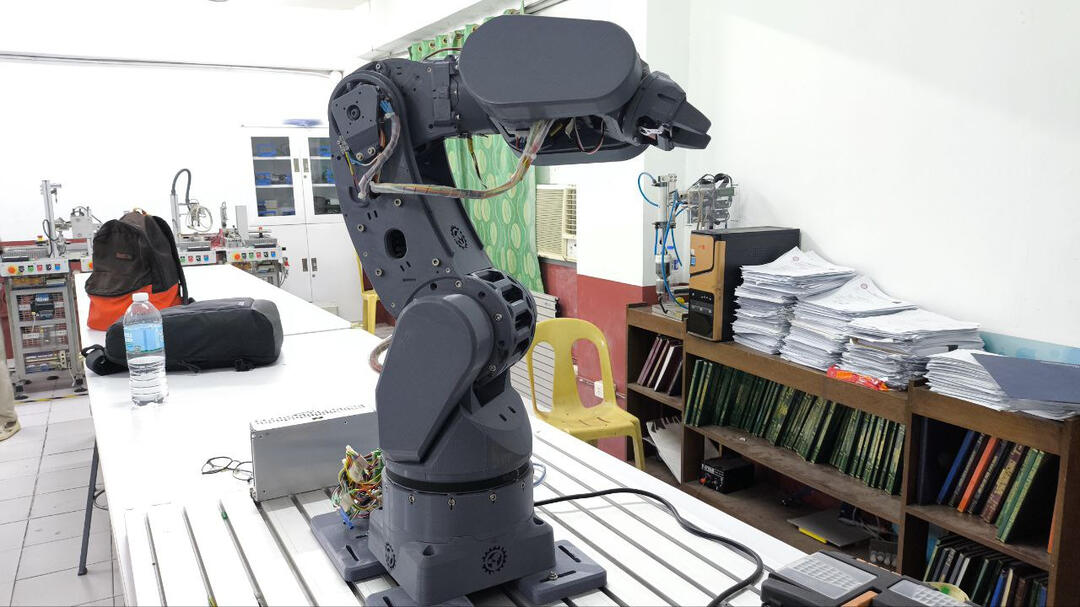
This project aims to attract young minds into robotics by allowing them to easily assemble and disassemble the robot to see how it works.On the Programming side, we made it easier for them, so they don't have to manually setup the ROS and other application to convert their C++ and Python codes into G-Code at which the robots uses for its movements.
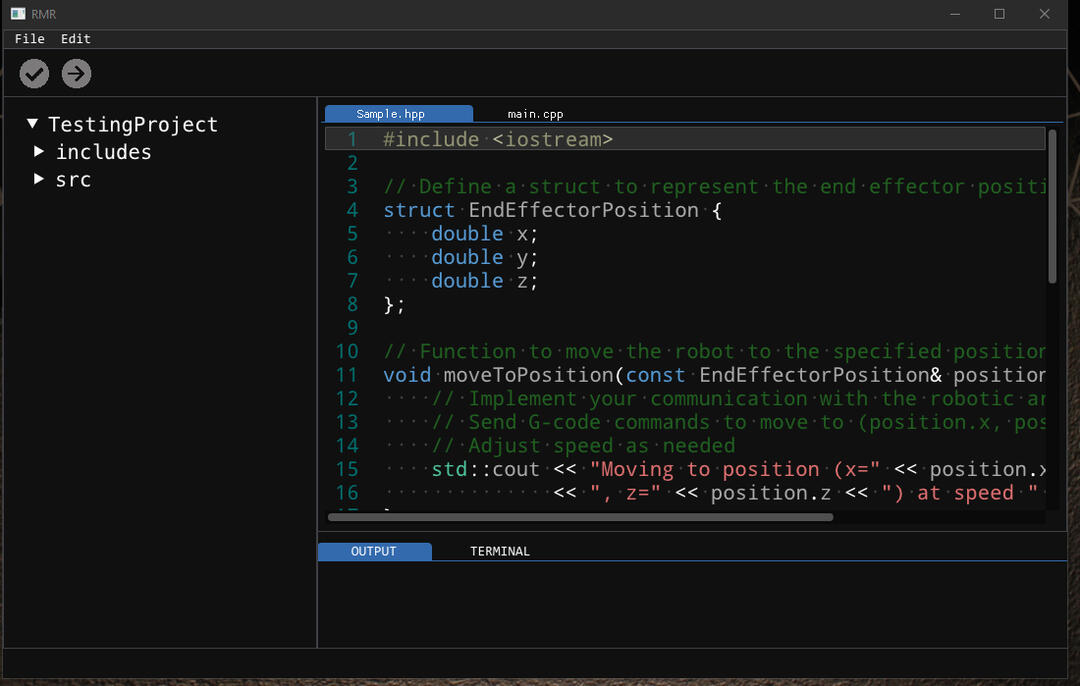
The purpose of this software is to automatically prepare all the needed script for programming the robot on either communicating with the Can-bus or by producing a gcode file for which the user can use to control the robot.The software consist of file directory tree allowing the user to navigate to all the scripts and programs. Additionally, it both supports Python and C++ programming language.The user can also interact with the terminals using the built in terminal emulator.
OpenGL Ocean Simulator
https://github.com/ron3545/Ocean-Simulator-Application
IntroductionThe ocean simulator project described herein is a comprehensive implementation based on the groundbreaking work of Jerry Tessendorf. The primary goal is to generate a visually realistic wave simulation that accurately mimics the dynamic behavior of ocean surfaces. This documentation provides an overview of the key steps involved in the project, highlighting the techniques employed and the underlying principles.Wave GenerationThe foundation of the simulation lies in the statistical approach to wave generation. The Phillips spectrum, utilizing random numbers, is employed to calculate the amplitude and direction of each wave component. This statistical method is crucial for generating a diverse and realistic range of wave patterns, capturing the complexity of natural ocean surfaces.Frequency Domain to Spatial Domain ConversionTo translate the wave components from the frequency domain to the spatial domain, the Fast Fourier Transform (FFT) is applied. This step is pivotal in obtaining a heightfield that accurately represents the displacement of waves on the ocean surface. The FFT allows for an efficient and realistic conversion, ensuring that the spatial representation captures the intricate details of wave interactions.Mesh Displacement
The mesh representing the ocean is dynamically updated based on the calculated heightfield values. A displacement mapping technique is employed to alter the vertices of the mesh, accurately reflecting the wave patterns present in the heightfield. This step ensures that the physical representation of the ocean surface aligns with the calculated wave dynamics, providing a realistic visual output.Rendering with OpenGL
The final stage involves rendering the ocean surface using OpenGL. Shaders and textures are utilized to simulate various visual aspects, including light reflection and refraction. These techniques enhance the realism of the simulation, making it visually compelling and immersive for the observer.Problem Addressed
Prior to the implementation of this ocean simulation project, creating realistic and dynamic ocean surfaces in computer graphics posed significant challenges. Traditional methods often fell short in capturing the complexity and diversity of natural wave patterns. Tessendorf's approach, as implemented in this project, addresses this problem by combining statistical methods, FFT, and rendering techniques to produce a visually accurate and captivating ocean simulation.Benefits of the Project
Visual Realism: The project achieves a high level of visual realism by accurately simulating the dynamic behavior of ocean waves, making it suitable for applications such as gaming, virtual reality, and simulation environments.
Versatility: The statistical approach and FFT-based frequency to spatial domain conversion allow for a wide range of wave patterns, making the simulation adaptable to different oceanic conditions and scenarios.
Educational Value: The project serves as an educational resource by demonstrating the application of statistical methods, FFT, and rendering techniques in creating realistic simulations, helping students and enthusiasts understand the intricacies of computer graphics and oceanography.
Scientific Exploration: The realistic representation of ocean surfaces provides a valuable tool for scientific exploration and analysis, allowing researchers to study wave dynamics and their impact on various phenomena.
2DOF Palletizing Robotic Arm
https://github.com/ron3545/2DOF-Palletizing-Robotic-Arm
The goal of this project is to create a robotic system capable of precise control and movement. The system consists of multiple joints, each driven by individual motors, and it incorporates sensor feedback to achieve accurate positioning. The project aims to demonstrate the integration of various technologies to build a functional robotic arm.